Registration
The DVLA wants evidence of age before it issues an age-related plate, usually a dating certificate. We have a lot of experience with historic registrations and can source the paperwork the DVLA needs.
Over 30 years old means a different tax rate, different paperwork and, often, a car that has spent its life somewhere dry.
5%
VAT
0%
duty
A car over 30 years old, of historical interest and in its original state, is taxed as something closer to an antique than a used car.
Instead of 10% duty and 20% VAT, you pay no duty and 5% VAT. On a £50,000 Monaro with £3,000 of shipping, that is £2,650 of VAT instead of £16,960 in duty and VAT.
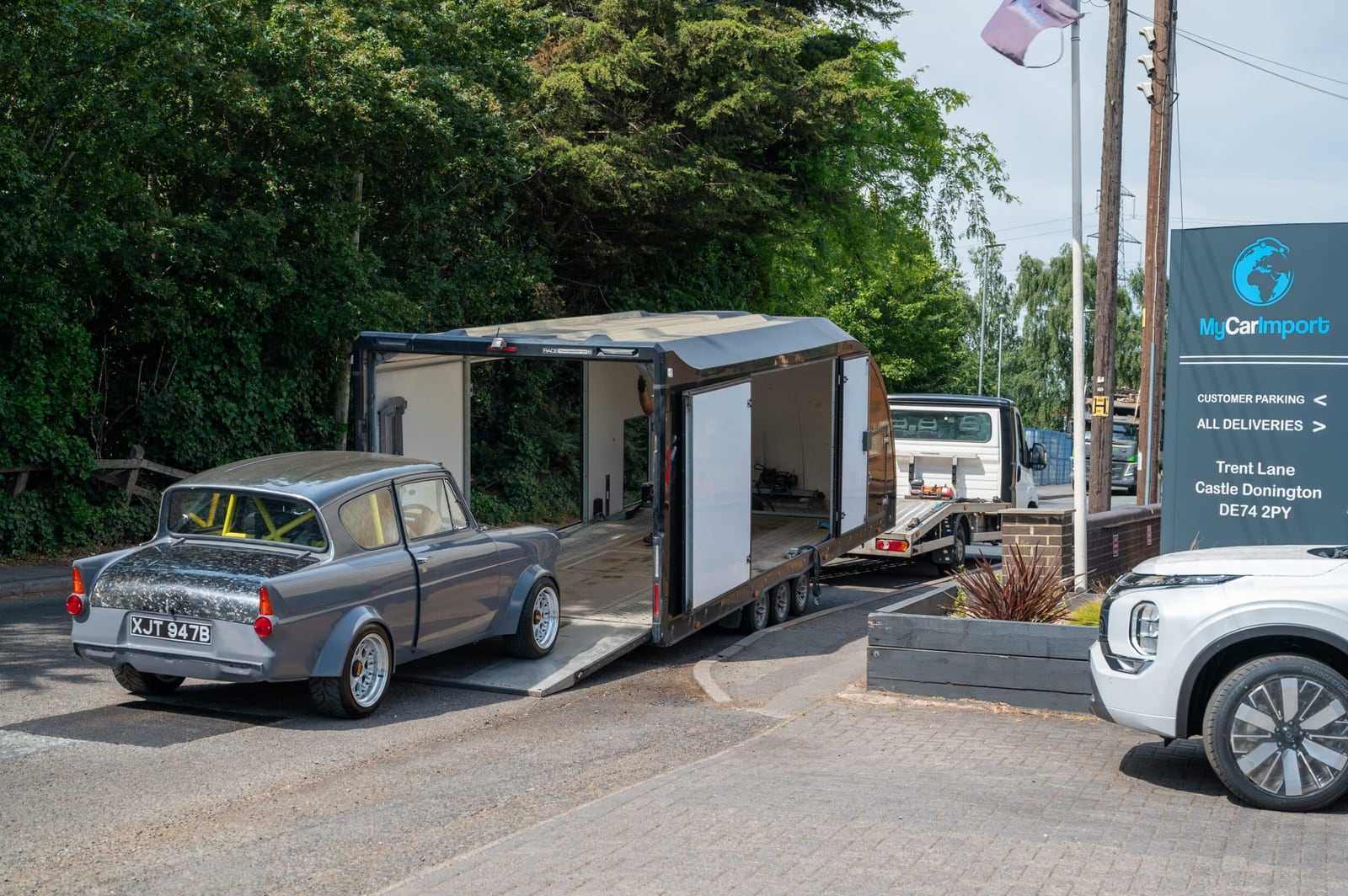
The catch is in the word original. Big changes to the engine, chassis or bodywork can take a car outside the rate. A careful restoration is usually fine. A modern crate engine and a new subframe may not be. We look at the car before you commit.
And plenty of British cars that went out to Australia decades ago and are now coming back.
The DVLA wants evidence of age before it issues an age-related plate, usually a dating certificate. We have a lot of experience with historic registrations and can source the paperwork the DVLA needs.
Cars over 40 can go into the historic vehicle tax class, which means no road tax. Many are also exempt from the annual MOT, as long as they have not been substantially changed. We will tell you if yours qualifies.
A classic travels in a container, sealed for the whole voyage and insured at its full purchase value. If you would rather it had a 20ft to itself, we can arrange that.
Classics go down the same lane as everything else. Over ten years old means an MOT rather than an IVA, and the usual Australian work: the speedo, and a rear fog light if it was first used from April 1980.
A car over 30 years old that is of historical interest pays 5% import VAT and no import duty. The VAT is worked out on the purchase price plus the cost of getting it here.
Not always. The historic rate is for cars in their original state, without substantial changes to things like the engine, chassis or bodywork. A period-correct restoration is usually fine; a modern engine swap may not be. We check before you buy.
Yes, if the DVLA can see evidence of when the car was built. That usually means a dating certificate from a recognised club or the manufacturer’s records. We know which evidence the DVLA accepts and can source it for you.
Send us the car before you buy it. We will check whether it qualifies for the historic rate and quote the whole job.
We use a cookie to remember this choice, and the site works fully without anything else. With your permission we would also like to use analytics cookies to see which pages are useful. They stay off unless you say yes. How we use cookies